Ella makes her mother's enchiladas for the Coleman family
Cinder & EllaElla makes her mother’s enchiladas for the Coleman family in an effort to meet a painful memory with an act of generosity. Cooking together briefly gives Ella and her father a rare, easy moment of closeness, but the meal also draws out the long history of his absence and ends in a confrontation over whether he ever acknowledged her as his daughter.
The Offer and Its Meaning
When the family discusses where to eat, Ella’s father recalls Lucinda’s green-chile enchiladas as the meal he missed most after their separation. The reference lands as an injury: Ella is already struggling with the sense that her father has treated her as an afterthought, and his casual evocation of her mother brings that hurt sharply into the room. Rather than leave, Ella takes a breath and proposes making enchiladas for everyone herself.
The offer is specific and vulnerable. Ella explains that Lucinda taught her to make enchiladas suizas when she was twelve, and quickly tries to withdraw the invitation when the family’s surprise makes her feel embarrassed. Jennifer immediately volunteers to buy the ingredients at Trader Joe’s, nearby down the hill. Ella waits for her father to decide whether he really wants the meal; he asks if she would truly make her mother’s enchiladas for them. Ella says yes, while also explaining that her injured right hand prevents her from doing much chopping. She can guide the cooking even if someone else has to do much of the physical work.
Her father accepts with evident feeling, though he tries not to overwhelm her with his reaction. The gesture does not repair the years between them, but it gives Ella a way to share something inherited from Lucinda without pretending that she is unhurt. Food becomes both a remembrance of her mother and a tentative invitation into the Coleman household.
Cooking Together
Half an hour later, Ella and her father stand in the kitchen wearing matching white aprons dotted with pink. He has unpacked the groceries and arranged the ingredients across the counter as if they were appearing on a cooking show. Jennifer raises her phone to take a picture; Ella smiles beside her father, though she feels nervous. It is the first photograph of them together in more than nine years, and Ella is surprised to realize that she wants a copy. Too shy to ask Jennifer to send it, she hopes Jennifer will do so without being asked.
The kitchen’s small mishaps help make the scene feel less formal than the family conflict that precedes it. Ella’s father is confused by the soup spoon and dessert spoon and asks how he is supposed to know which is a teaspoon. Juliette also joins in, but Ella keeps her away from frying the chicken or tortillas, assigning her the cheese to grate instead. Jennifer stays at the counter, joking that too many cooks spoil the broth, while her wary attention to the butter, heavy cream, and cheese amuses Ella.
The meal succeeds on its own terms: the enchiladas taste good, and the atmosphere is more relaxed than Ella has experienced in the Colemans’ home. Even Anastasia eats without insulting her. Ella’s father praises the dish as possibly better than Lucinda’s, giving Ella the first sincere compliment she can remember receiving from him. Ella rejects the comparison, but the compliment has already reached her; it leaves her feeling warm inside.
Memory Turns to Grief
The ease does not last. Ella mentions that her grandmother taught her the secret of sopaipillas before she died and begins to suggest making them at Christmas. The thought of a future holiday meal with her family immediately brings Lucinda’s absence back into focus. A painful stab of grief interrupts Ella, and she hides her eyes behind a cloth napkin while murmuring an apology.
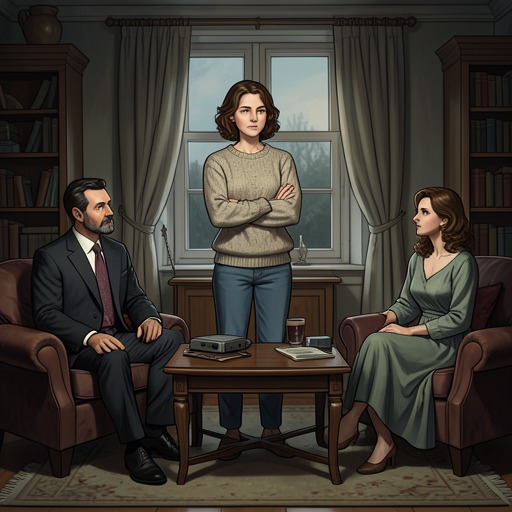
When the conversation establishes that Lucinda died when Ella was fourteen, Anastasia sharply objects to Ella describing herself as having had no one else: she had a father, Anastasia says. Her accusation changes the meaning of the evening. The dinner had seemed to offer a small beginning, but the question is no longer only what Ella lost when her mother died. It is also why her father’s other daughters apparently knew nothing about her until the police called after Ella’s accident.
Ella learns this as the confrontation unfolds. Her father avoids her eyes, and Juliette’s expression confirms that Anastasia is telling the truth: he had never told his daughters about Ella. Jennifer, by contrast, says she knew of Ella because, early in her relationship with Ella’s father, he often told her stories about his daughter. The different accounts deepen the rupture rather than settle it. Ella’s father had spoken of her to Jennifer, yet his daughters did not know she existed.
The Dinner’s Collapse
Anastasia’s accusation provokes Ella to speak for herself rather than let her father fight the battle for her. She recounts sending photographs, drawings, cards, and letters for years, writing how much she loved and missed him and begging him to visit. He never wrote back or called. For the first few years, she received an occasional birthday or Christmas card, but even those eventually stopped. Ella explains that she finally gave up: no girl can withstand endless rejection, and eventually pride takes over.
The account makes clear that her distance from her father was not a simple refusal of family. Ella had repeatedly tried to reach him and had been left without a response. Her father apologizes, but she does not answer him; instead, she asks Jennifer if she may leave the table. As Ella flees to her room, she hears Juliette shouting at Anastasia for ruining everything. The dinner’s brief warmth cannot contain the truth that has surfaced: Ella once reached toward her father again and again, while he failed to make her part of the family his other daughters knew.